
Grandmother’s Hole Beach: The Ultimate Guide to South Goa’s Most Secret Cliffside Cove
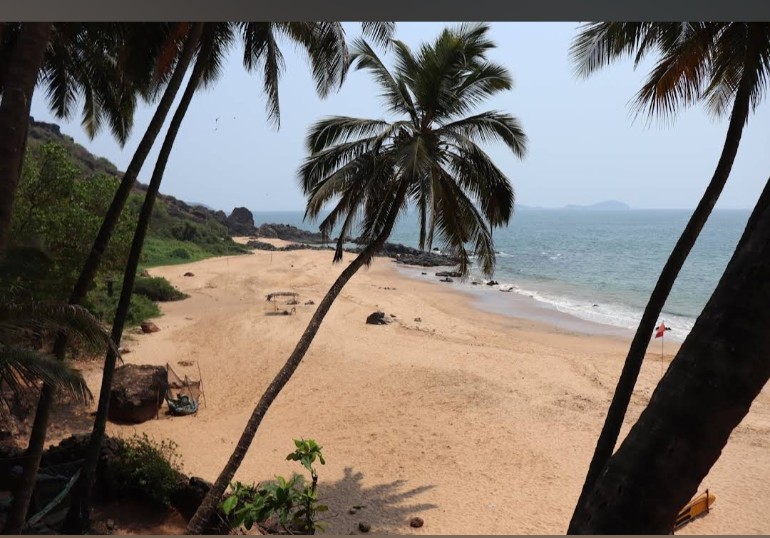
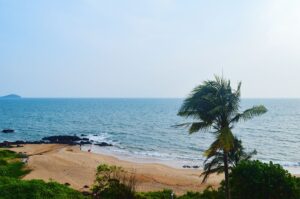
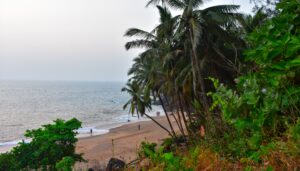
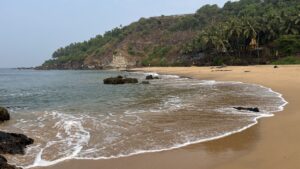
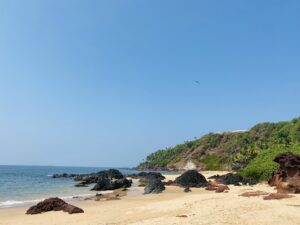
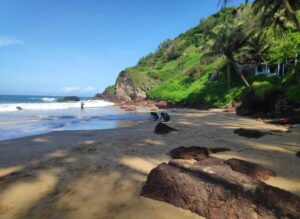
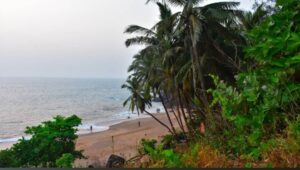
Grandmother’s Hole Beach is a beautiful, tiny beach hidden underneath the big cliffs of South Goa. Unlike the long, crowded beaches you usually see in Goa, this secret spot has cool rock formations, a small patch of soft sand, and total quiet. It is one of the most hidden beaches in the area, and because there are no shops, loud music, or tourist crowds, it feels completely untouched.
The beach is located in a place called Headland Sada in the town of Vasco da Gama. It sits right below a pretty public park called the Japanese Garden and looks out at the big ships moving in and out of the harbor. It is about 3 km from the middle of Vasco city and 8 km from the airport. It has stayed a secret for a long time because you have to walk down a special trail to reach the sand.
How to Reach Grandmother’s Hole Beach
View Location On Google Maps 📍
There is no direct vehicular road leading down to the sand line of Grandmother’s Hole Beach. Accessing this hidden spot requires a short hike on foot.
The Hillside Descent
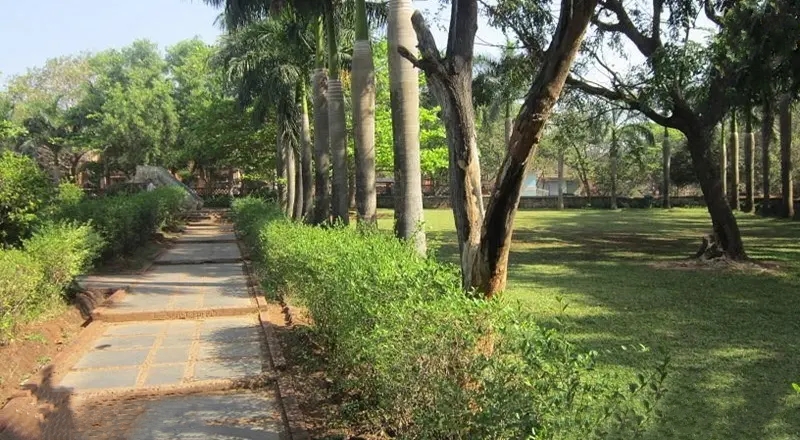
- The Starting Point: Drive or take a taxi to the Japanese Garden located in the Mormugao Port Trust (MPT) housing colony at Headland Sada, Vasco.
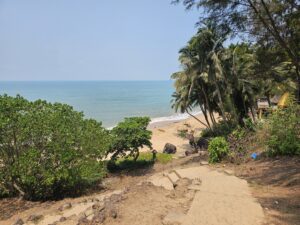
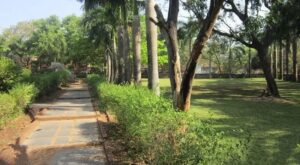
- The Path: From inside the garden perimeter, look for the historical, zigzagging stone staircase. You must descend roughly 220 to 300 steps down the steep cliffside.
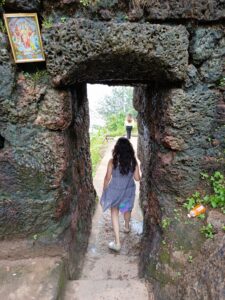
- Passing Through the “Hole”: Near the bottom of the trail, the path winds through the ancient, crumbling stone ruins of a Portuguese fort wall. To step onto the beach, you must literally pass through a small gap or doorway in the fortification—the very “hole” that gives the beach its iconic name.
- Parking: Ample public parking spaces for scooters, motorbikes, and cars are available right outside the main entrance gates of the Japanese Garden at the top of the cliff.
Accessibility Warning
Physical Requirement Notice: Due to the steep nature of the cliffside trail and the workout of climbing over 200 steps back up in the tropical heat, this beach is not recommended for senior citizens with joint pain, toddlers, or anyone with significant mobility issues. If the climb is too demanding, you can still enjoy a spectacular, panoramic bird’s-eye view of the entire beach and the Arabian Sea from the flat lawns of the Japanese Garden above.
What to Do at Grandmother’s Hole Beach
Grandmother’s Hole Beach is highly specialized for slow travel, heritage exploration, and quiet relaxation.
- Picnicking & Absolute Solitude: Since the beach is rarely visited by mainstream travelers, you will often find yourself completely alone on the sand. It is an exceptional spot to pack your own mat, lay down, read a book, or enjoy a quiet, private picnic under the natural shade of the coastal trees.
- Explore Heritage & Folklore: Passing through the ancient stone archways of the ruined fort offers a fantastic glimpse into Goa’s maritime history. Right on the shore sits a small, spiritual temple (Shree Durgamata Shiv Temple) and a cross, giving the isolated beach a very peaceful, soulful atmosphere.
- Unique Ship Spotting & Photography: Because the cove faces the entrance of the busy Mormugao harbor, you can sit on the sand or the temple benches and photograph massive international cargo ships, naval vessels, and luxury cruise liners sailing past the horizon.
Safety & Swimming Notice
Real-Time Update: Grandmother’s Hole Beach is NOT considered safe for casual swimming or recreational beach sports. The shoreline is heavily lined with jagged, submerged volcanic rocks and sharp barnacles. Combined with the absolute absence of government lifeguards or rescue equipment, entering the water or wading past the surf line can be highly hazardous. Visitors should visit strictly for the views, the history, and the coastal solitude.
Food and Accommodation
To preserve its natural purity and historical setting, commercial developments are completely banned on this shoreline.
Where to Stay
You cannot stay overnight on the beach. Most travelers choose to stay in the immediate Vasco da Gama city center (3 km away), which features excellent, transit-friendly hotels like The HQ, Regenta Place Vasco, or Hotel La Paz Gardens. Alternatively, the popular resort village of Bogmalo Beach is just a 15-minute drive south, offering premium properties like the Bogmallo Beach Resort.
Where to Eat
There are no beach shacks, juice stalls, or restaurants operating on the sands of Grandmother’s Hole Beach. A lone local vendor occasionally sells fresh tender coconuts at the Japanese Garden entrance above.
- Pro Tip: You must carry your own drinking water and snacks down the steps. Please practice responsible tourism and pack out every piece of trash you bring down to keep this hidden treasure clean. For a full sit-down seafood dinner after your hike, head into Vasco town or down to Joets at Bogmalo Beach.
The Story Behind the Name
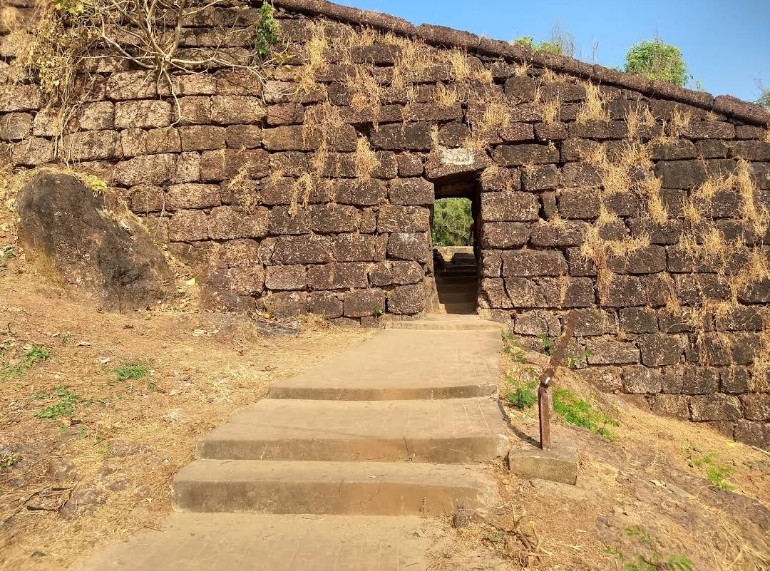
The evocative name “Grandmother’s Hole” is rooted deeply in local Goan folklore. According to native village legends, a kind-hearted local grandmother used to walk down to this specific hidden cove every single day. She would patiently sit by the narrow gap in the ancient fort wall, staring out across the open sea for hours, waiting anxiously for her fisherman sons to safely navigate their boats back to the harbor.
Image Gallery of Grandmother’s Hole Beach
Frequently Asked Questions (FAQ)
Is there an entry fee to visit the beach or the Japanese garden?
Entry to both Grandmother’s Hole Beach and the hilltop Japanese Garden is completely free of charge.
Can I visit this beach during the monsoon season?
Visiting during the monsoons (June to September) requires extreme caution. Heavy rains can make the 200+ stone steps highly slippery, and the dense wild vegetation can crowd the narrow trail. Furthermore, stormy ocean waves can rise rapidly, completely swallowing the narrow sandy strip against the rocky cliffs. It is best visited during the dry months from October to May.
Are there public washrooms or changing blocks on the sand?
No. Because there is zero commercial or municipal infrastructure built on the secluded shoreline, there are no toilets or changing facilities available. Basic restroom facilities can be accessed near the residential areas or commercial spots back in the main Sada neighborhood.
Is the beach clean?
Because it is a hidden spot without daily municipal cleaning crews, tidal currents occasionally wash up plastic debris and marine rubbish onto the rocky corners. However, the main sandy patch near the temple remains a beautiful, raw escape if visitors respect the environment and clean up after themselves.
How far is the beach from the nearest railway station?
The beach trail begins just 3 km away from the Vasco da Gama Railway Station. A quick 10-minute auto-rickshaw, local taxi, or public city bus ride from the station platform to the MPT Society bus stop will drop you right near the entrance of the Japanese Garden.